


By Don Tomko, Owner, Advanced Precision Roofing · Family owned, licensed and insured · ROC #265504 (K-42) · Serving the East Valley since 2009
If your tile roof leaks, the tile is usually not the real problem. On most older Arizona tile roofs, a leak points to aging underlayment under the tile, so the lasting fix is usually tile underlayment replacement, not a patch. A small tile roof repair still makes sense when the damage is limited to a few broken tiles and the underlayment beneath them is healthy. This guide explains how to tell the difference before you spend money on the wrong fix.
Why the tile is rarely the real problem
On a tile roof, the tile is the first shield against rain and sun. The underlayment beneath it is what keeps water out of the roof deck. That matters because the two layers age at very different speeds: tile can last 50+ years, while felt underlayment in Arizona typically lasts 15–25 years.
So on a tile roof that is 20 or more years old, the tile on the roof surface often still looks fine while the felt underneath has worn out. According to Owens Corning, felt may dry out or leach oils in the heat, which reduces its ability to resist moisture.
“Most of the tile I walk on in Gilbert, Mesa and Chandler is fine. It’s the original felt underneath that has given up,” says Don Tomko, owner of Advanced Precision Roofing.
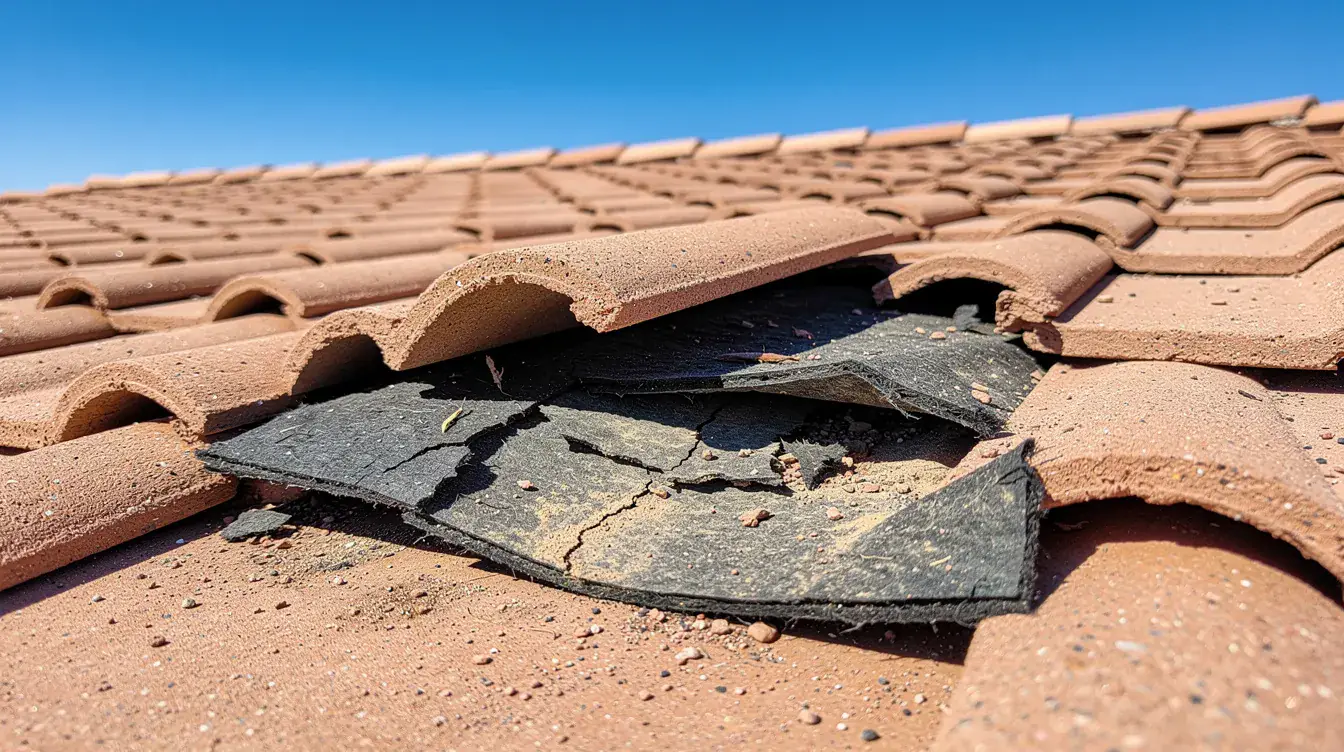
That is why, on older East Valley homes, a tile roof leak so often traces back to deteriorated underlayment rather than to visible damage on top.
What broken, cracked or missing tiles actually mean
Broken tiles still matter. The Tile Roofing Industry Alliance (TRI) warns that broken tiles let water and UV rays reach the underlayment, which can damage it, and recommends replacing broken tiles as soon as possible.
A cracked tile, missing tiles or displaced tiles on a roof with healthy underlayment is a small problem. The same broken tile on a roof with old underlayment is often just the place where a bigger problem shows up first.
TRI also points to flashings, such as vents, plumbing stacks, skylights and headwall details, as critical to a tile roof’s long-term performance. It notes that compromised metal flashing may be refastened, but recommends replacing a flashing detail when its integrity is compromised, and removing excessive debris from gutters and valleys so water keeps flowing.
Common failure points on a tile roof
When a tile roof leak shows up as a ceiling stain, the actual source is not always right above it. These are the vulnerable areas a roof inspection checks first:
- Roof valleys, where two roof planes meet and water collects. Debris that builds up in valleys slows the water down.
- Flashing details around vents, plumbing stacks, skylights and walls. Flashing failures at these spots can let water in even when the tile looks perfect.
- Broken, cracked or slipped pieces of tile, which expose the underlayment to water and sun.
- The underlayment itself, especially once it passes the age felt typically lasts.
On our underlayment replacement jobs, we install 24-inch valley metal and 6-inch channel metal where needed, because valleys are where water concentrates.
Clay tile and concrete tile roofs share these failure points. If your roof is concrete tile, our concrete tile roof guide covers how that material ages.
Tile roof repair vs. underlayment replacement vs. full replacement
A tile roof repair fixes one spot. It usually means replacing broken or missing tiles, or fixing the area around a single leak. It makes sense when the underlayment across the rest of the roof is still in good condition.
Tile underlayment replacement fixes the layer that keeps water out across the whole roof. The tile is lifted, the old underlayment is torn off, new underlayment goes down, and the tile is reinstalled. It makes sense when the underlayment itself has reached the end of its life.
A full replacement means a new roof: new underlayment and new tile. It makes sense when the tile itself is worn out, which we cover below.
The question is not how bad the leak looks from inside. It is what condition the underlayment is in across the whole roof.
| Tile roof repair | Underlayment replacement | |
|---|---|---|
| What it fixes | One area: broken tiles or a single leak spot | The underlayment across the entire roof |
| Makes sense when | The underlayment is still healthy | The underlayment has aged out |
| Tile | Damaged pieces replaced | Existing tile lifted and reinstalled |
| What happens next | The rest of the roof keeps aging | The whole roof starts fresh underneath |
Why patching old underlayment often doesn’t last
A tile roof leak repair fixes the spot that leaked today. If the felt across the roof has aged out, the next weak spot is already waiting somewhere else, and recurring leaks are the usual result. Repeated roof repair work on aging underlayment adds up, while the real problem stays in place. Ignoring a leak is worse: water that keeps reaching the roof deck can damage it and add deck repair to the job. We cover this in more detail, including what drives the cost of the job, in our tile roof underlayment replacement cost guide.
What to do if your tile roof is leaking now

If water is coming in during heavy rain, start with what you can safely do from inside:
- Catch the water and move belongings away from the drip.
- Photograph the ceiling stain and note when the leak appears, such as during heavy rain or wind-driven rain.
- Stay off the roof. Foot traffic can crack tile, and TRI says tiles damaged by foot traffic should be replaced.
- Book a roof inspection so the actual source is found before work begins.
Leak tracing: how a free inspection answers the question
You can’t see the underlayment from the ground, and walking on a tile roof yourself can crack tiles. TRI strongly recommends that only trained, insured professionals walk on a tile roof.
A proper roof inspection is leak tracing, not guessing. It looks past the ceiling stain to the actual source of the roof leak and to the condition of the underlayment across the whole roof. At Advanced Precision Roofing, Don walks every roof himself, so the answer to “repair or replace the underlayment?” comes from the person who owns the company. Our roof inspection guide explains what an inspection covers for tile, shingle and flat roofs.
TRI also recommends inspecting a tile roof every couple of years. Regular inspections are the simplest form of roof maintenance, because they catch problems before the next storm turns them into an active leak. When underlayment replacement is the answer, the written proposal names the exact product, so you know what goes on your roof before work begins.
When you need a new roof instead
Sometimes the tile is the problem. If the existing roof has widespread broken tile, or you simply want a different look, a new tile roof may be the better project than reinstalling the old tile. If the underlayment is the only issue, keeping your tile and replacing what’s underneath is usually the simpler path. Our guide on how to choose tile roof underlayment explains the options.
How to choose a roofer for tile roof repairs or replacement
Whether you need small repairs or new underlayment, a few checks protect you:
- Licensing and insurance. Arizona contractors are licensed by the Registrar of Contractors. Ask for the ROC number and proof of insurance. Ours is ROC #265504 (K-42).
- Tile experience. Tile roofing systems need careful handling, because intact tiles can crack when they are walked on or lifted the wrong way.
- A written scope. A clear proposal names the work and the exact materials. A vague quote for “roof repair” can mean a surface fix that leaves the real problem in place.
If your property is a commercial building with low slope roofs or parapet walls rather than a tile roof, see our commercial roofing page instead.
FAQ
Can a tile roof be repaired?
Yes. Broken, cracked or missing tiles can be replaced, and TRI recommends replacing broken tiles as soon as possible. A repair is the right fix when the underlayment underneath is still healthy.
Can a broken roof tile be repaired?
Usually a broken tile is replaced rather than repaired. TRI notes that small corner chips under about three inches may be glued in place.
Why does my tile roof leak if the tiles look fine?
On older Arizona tile roofs, the reason is usually worn-out underlayment. Felt typically lasts 15–25 years, while tile can last 50+ years, so the tile often outlives what’s underneath.
How do I know if I need underlayment replacement?
The age of the roof and the condition of the underlayment decide it. If the roof is approaching or past the age felt typically lasts, or leaks keep coming back in different spots, have the underlayment inspected.
Can storm damage cause a tile roof leak?
Yes. Storm damage such as broken or displaced tiles can expose the underlayment, and TRI recommends replacing broken tiles as soon as possible. On a roof with old underlayment, a storm often reveals a problem that was already there.
Should I walk on my tile roof to check it?
No. Walking on tile can crack it, and TRI strongly recommends that only trained, insured professionals walk on a tile roof.
Get a free inspection
Not sure whether your leak needs a repair or new underlayment? Don walks every roof himself and will tell you what your roof actually needs. We serve homeowners in Gilbert, Mesa, Chandler, Tempe and Scottsdale, and financing is available. Call 480-255-1115 or learn more about our residential roofing services.


