

Skip to content
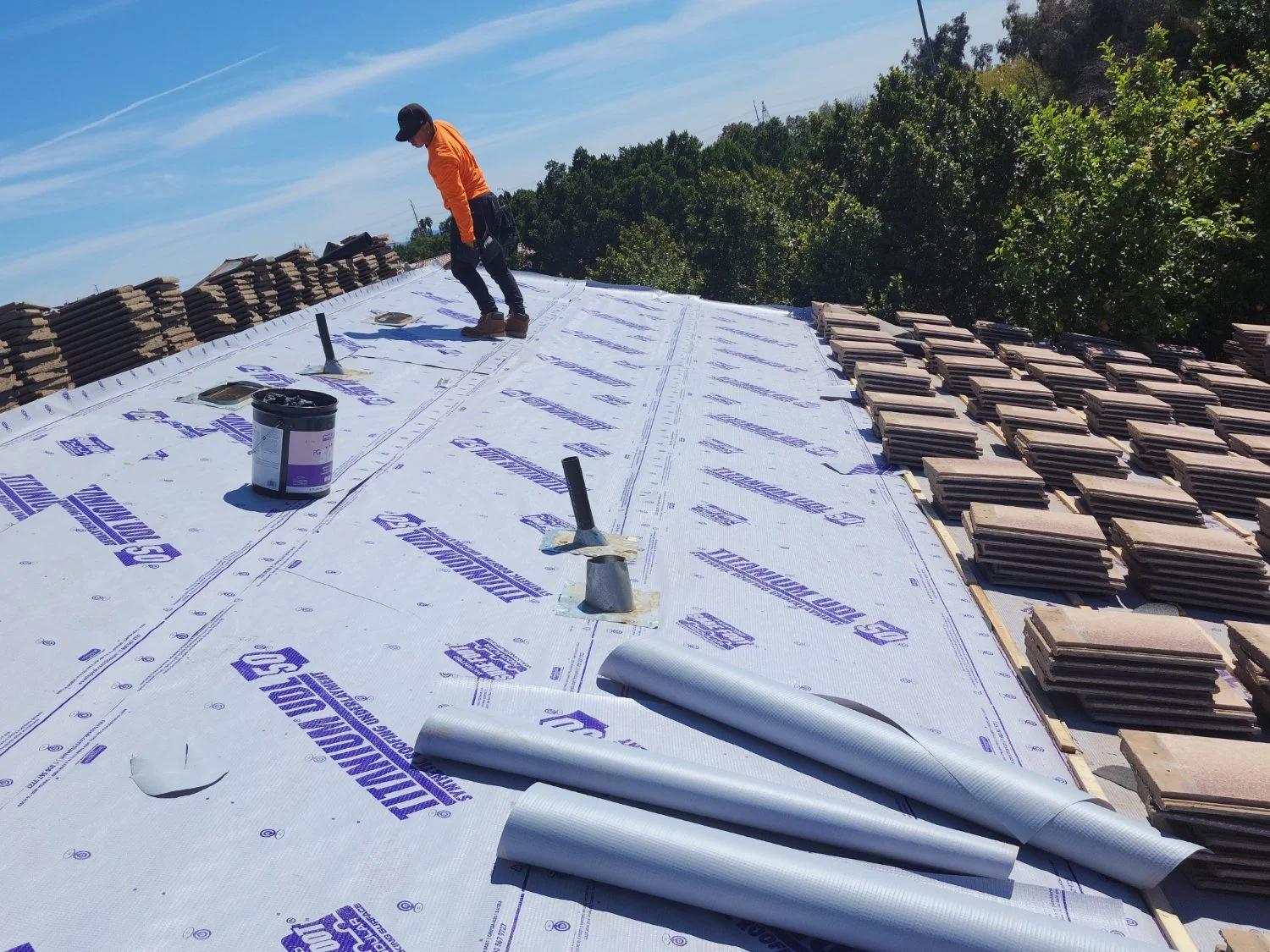
Titanium UDL50 synthetic underlayment being installed on a tile roof, with the tile stacked in rows alongside
Serious About Quality

How to Choose Tile Roof Underlayment in Arizona

Felt, synthetic or peel and stick: four questions that decide the right underlayment for your East Valley tile roof.

By Don Tomko,
Owner, Advanced Precision Roofing

  • Family owned, licensed and insured
  • ROC #265504 (K-42)
  • 17+ years in the East Valley (founded 2009)
  • 1,800+ roofs completed

The best underlayment for tile roof replacement in Arizona depends on four things: how long you plan to stay, how hot your attic runs and how high your cooling bills are, the type of roof you have, and your budget. The tile on most East Valley homes can last for decades. The roof underlayment beneath it usually wears out first, so the choice you make decides how long your roof stays watertight the second time around.

There's no single best roof underlayment for every house. At Advanced Precision Roofing, we install three underlayment options: 40 lb commercial-grade underlayment, a double layer of 30 lb base with Titanium UDL50 synthetic underlayment over it, and Westlake TileSeal. Every written proposal names one of them for your specific roof. This guide walks through the same questions Don asks on every roof inspection. If you already know you need the work done, see our tile underlayment replacement service.

Don's take:

“Your tile is the rain shield. The waterproofing under it is the roof. Most of the tile I walk on in Gilbert, Mesa and Chandler is fine. It's the original felt underneath that has given up.”

Don Tomko, Owner

The basics

Why Roof Underlayment Matters More Than the Tile

Roof underlayment sits between the roof deck and the tile. The tile is the roof covering: it sheds sun and most of the rain. The underlayment, together with the flashing, valleys and sealing around every penetration, is the layer that actually keeps water out of the house.

Arizona is hard on that layer. Years of sun, UV and daily temperature swings dry out older asphalt saturated felt until it turns brittle, cracks and shrinks away from its fasteners. Water that gets under the tile is supposed to run down the underlayment and out at the eaves. When a monsoon storm drives wind and rain past the tile and the layer has failed, it reaches the wood deck instead. That's why a tile roof leaks even when every tile looks perfect, and why stains often show up first near the eaves and valleys.

On many older East Valley homes, the original builder-grade felt lasts roughly 15 to 25 years, while concrete tile or clay tile can last more than 50. So most homeowners replace the underlayment and keep their tile. A well-maintained tile roof can last more than 40 years when the underlayment is replaced as it degrades. Premium high-temperature products outperform standard ones here "by years, not months."

Tile
The roof covering: sheds sun and most of the rain
Underlayment
The layer that actually keeps water out of the house
Roof deck
Where water ends up when the layer has failed
Original builder-grade felt on many older East Valley homes
15–25years
Concrete tile or clay tile
50+years
A well-maintained tile roof with the underlayment replaced as it degrades
40+years

Compare

Felt, Synthetic or Peel and Stick: The Main Types of Underlayment

Roofers group tile roof underlayment into three broad families. All three can work in Arizona when they're rated for the heat and installed correctly.

Main types of tile roof underlayment compared
Type What it is Where it fits on an Arizona tile roof
Asphalt felt

Asphalt saturated felt; the original material on most builder-grade roofs. Commercial-grade felt is heavier

A proven choice when the right weight is used and every detail is done correctly. Older asphalt-based felt dries out and cracks under Arizona heat and UV

Synthetic underlayment

A high-temperature synthetic sheet, lighter and more tear resistant than felt, often installed over a felt base layer

Double-layer systems built for Arizona's climate. Two layers give the roof redundancy if one is ever compromised

Self-adhered (peel and stick) membrane

A rubberized membrane that bonds directly to the deck

Premium full-roof systems, and the extra protection monsoon water may need at valleys, penetrations and low-slope transitions

Whatever the type, ask for an underlayment with a heat rating suited to Arizona. The label on the roll matters less than the whole assembly: the right product for the heat, installed to the manufacturer's specifications and current code, with valleys, walls, eaves and penetrations detailed correctly.

Four questions

The Best Underlayment for Tile Roof Homes: Four Questions to Find the Right Underlayment

  1. 01 How long you plan to stay
  2. 02 Attic heat and cooling bills
  3. 03 The type of roof you have
  4. 04 Your budget

1. How long will you stay in the home?

If this is your forever home, you want the longest-lasting option you can get in Arizona's climate. Replacing underlayment later means lifting every tile on the entire roof again, not just the rest of the roof around a leak. If you plan to sell in a few years, it's tempting to choose the cheapest option.

Don's take:

“Plenty of people tell me they're selling in ten years. A lot of them are still here at fifteen or twenty. That's why I like a long-life synthetic: it covers the ten-year plan that turns into fifteen or twenty.”

Don Tomko, Owner

What it points to:

a longer horizon points toward a long-life synthetic, such as the double-layer 30 lb base + Titanium UDL50 system. Whatever you choose is installed to the manufacturer's specifications, and you receive the manufacturer warranty paperwork at the final walkthrough.

2. How do your cooling bills and attic heat compare with the size of the house?

High summer cooling bills for the square footage, or a thermostat that has to sit low to stay comfortable, can point to an attic ventilation problem. A trapped, overheated attic space bakes the underside of the roof deck, and that shortens the life of any underlayment.

What it points to:

make sure the attic can breathe before choosing the material. Ridge and soffit vents should be clear and working, or even a premium membrane ages early. During the inspection, Don walks the roof and documents the underlayment, flashing and deck condition. The rebuild includes new vent pipe seals and T-vent flashings with full sealing details.

3. What kind of concrete tile or clay tile roof do you have?

Concrete and clay tile, in S-tile, barrel or flat profiles, all go over the same kind of assembly: underlayment, battens, flashing and drainage metal. What changes the recommendation is the roof design: valleys, walls, slope, low-slope transitions and patio tie-ins.

What it points to:

monsoon water finds the vulnerable areas first, so they get extra protection. APR's rebuild steps include 24-inch valley drainage metal with a redundant underlayment layer beneath the valley pan, 6-inch channel drainage metal at tile-to-wall terminations where needed, and, where applicable, a specified roofing system on flat patio areas. If you have solar panels, they're removed and replaced through a licensed company.

Thinking of converting from asphalt shingles to tile? Concrete tile is considerably heavier than shingles, so the structure has to be checked before any shingles come off. In return, tile reduces heat transfer into the house, while shingle roofs absorb more of the sun and raise attic temperatures. If you'd rather stay with asphalt shingles, see our shingle roofing service.

4. What's your budget for replacement underlayment, and is there an insurance claim?

Replacement underlayment is a once-in-decades purchase. The price depends on the roof's size, slope, decking and details as well as the material. If the work is tied to an insurance claim, tell Don at the roof walk; the photo-documented inspection and written scope document what's on your roof.

What it points to:

the written proposal names the product and materials, and it's the final scope, with no change orders for work it already lists. It includes three sheets of replacement plywood, with any additional decking at published rates. Financing is available; ask during the roof walk. For typical price ranges, see our tile roof underlayment replacement cost guide.

What we install

The Best Roof Underlayment Options APR Installs

Tile roof underlayment options installed by Advanced Precision Roofing
Option What it is Layers
40 lb commercial-grade

Heavyweight, commercial-grade 40 lb felt underlayment

Specified in the proposal

30 lb base + Titanium UDL50 synthetic

A 30 lb base layer with Titanium UDL50 synthetic underlayment installed over it

2

Westlake TileSeal

According to the manufacturer, Westlake Royal: a self-adhered, premium high-temperature underlayment for tile roofs that self-seals around fasteners

Per the manufacturer's specification

Every option is installed to the manufacturer's specifications. The written proposal names the one recommended for your roof, and why.

Checklist

Installation Tips: What to Ask Any Contractor

Installation matters as much as the product. Valleys and penetrations are where monsoon water tests a roof first. Before you compare quotes from professional roofers, ask every contractor:

  1. 01 Which underlayment product, by name, goes on my roof, and what's its heat rating?
  2. 02 How are valleys, walls, eaves, vents and other penetrations detailed?
  3. 03 Will you tear off to the roof deck, or layer over the old felt?
  4. 04 Will the underlayment be laid from the eaves up, with every course lapping the one below, and covered with tile before it sits exposed to the sun for long?
  5. 05 How much decking is included, and how is extra priced?
  6. 06 Will you pull permits and follow local code?
  7. 07 Will I get photos and a written scope before work starts?

At APR

At APR, those answers are written into every proposal. Each roof is measured from an aerial report (roof outline, flat sections, tile count and estimated tile weight) and walked by Don, so the estimate uses measured data and the condition he finds. The proposal names the underlayment and materials and lists the rebuild steps your roof needs from APR's 18-step sequence:

  • a complete tear-off to the deck with no layering over old felt
  • new battens
  • vent pipe seals and T-vent flashings
  • valley and wall drainage metal
  • metal edges sealed with polyurethane sealant where needed
  • new ridge and hip enclosure
  • broken tile replaced with the closest available match
  • existing tile reset for the best practical alignment
  • penetrations painted to match the tile
  • three rows of perimeter tile secured per current code

You get photos before work starts and manufacturer warranty paperwork at the final walkthrough.

Avoid these

Common Mistakes When Choosing Tile Roof Underlayment

  • Patching leaks on a worn-out layer.

    Recurring repairs often mean the failure is wider than one spot. Replacing broken tiles doesn't restore the underlayment underneath.

  • Layering over old felt.

    New material over brittle felt keeps the old problem in the roof. Tear off to the deck so the deck can be inspected and repaired.

  • Choosing by the label alone.

    Valleys, eaves, penetrations and wall flashing decide the durability of any material.

  • Ignoring ventilation.

    A poorly vented roof shortens the life of every underlayment.

  • Accepting an unnamed product.

    If a quote just says "new underlayment," ask for the product name.

Side by side

Pros and Cons at a Glance

Pros and cons of each tile roof underlayment approach
Approach Pros Cons
Replace underlayment, reuse tile
  • Keeps tile that can last 50+ years
  • restores the waterproofing
  • most tile is reusable
  • Cracked tile must be replaced, and aged tile may not match new tile exactly (it's placed where least visible)
40 lb commercial-grade felt
  • Heavyweight, commercial-grade felt
  • Felt is asphalt-based, and asphalt-based felt dries out under Arizona heat and UV over time
Double-layer synthetic
  • Built for high temperatures
  • synthetic underlayment is light and tear resistant
  • two layers of redundancy
  • Synthetic typically costs more than felt
Self-adhered membrane
  • Bonds directly to the deck
  • strong protection where water concentrates
  • Fully adhered membranes can be difficult to remove in a future reroof without damaging the deck
Patching leaks only
  • Lowest cost today
  • Doesn't fix aging underlayment
  • recurring repairs often signal wider failure

FAQ

Frequently Asked Questions

Does a tile roof need underlayment?

Yes. Underlayment is the secondary barrier against water. The tile sheds sun and bulk rain, but water that gets past the tile, in a wind-driven monsoon storm for example, has to be stopped by the underlayment and flashing.

Can I replace tile roof underlayment without replacing my tile?

Usually, yes. If the tile is structurally sound, we remove and stack it, replace the underlayment down to the deck, and reset the same tile. Cracked tile, or tile that breaks during handling, is replaced with the closest available match. We identify and price it up front.

How long does tile roof underlayment last in Arizona?

Older builder-grade felt typically lasts about 15 to 25 years here. The life of modern high-temperature synthetic and self-adhered products depends on the product, roof design, exposure and installation quality. Poor attic ventilation shortens every product's life.

What are the signs my underlayment is failing?

Recurring leaks after repairs on the same area of the roof, water stains on ceilings near eaves or valleys, brittle or cracked felt, slipped tile, exposed or damaged flashing, and fascia or soffit damage.

How long does the job take, and do I need to move out?

It depends on the roof's size, pitch and what the deck needs. You get a schedule in the written scope before work begins, and we tell you the same day if anything changes. You can stay home. The work is loud, but driveways and walkways stay clear and the site is cleaned every day.

Is financing available?

Yes. Ask during the roof walk, and we'll go over the options with your written scope.

Next step

Not Sure Which Underlayment Fits Your Roof?

Don will walk your roof, photograph what he finds, and give you a written report and proposal that names the underlayment recommended for your home, free and with no obligation. We serve Gilbert, Mesa, Chandler, Tempe, Scottsdale and the surrounding East Valley, and we respond the same business day.

or talk to the owner direct 480-255-1115
animation