

Seamless, recoatable, and built to never be torn off again
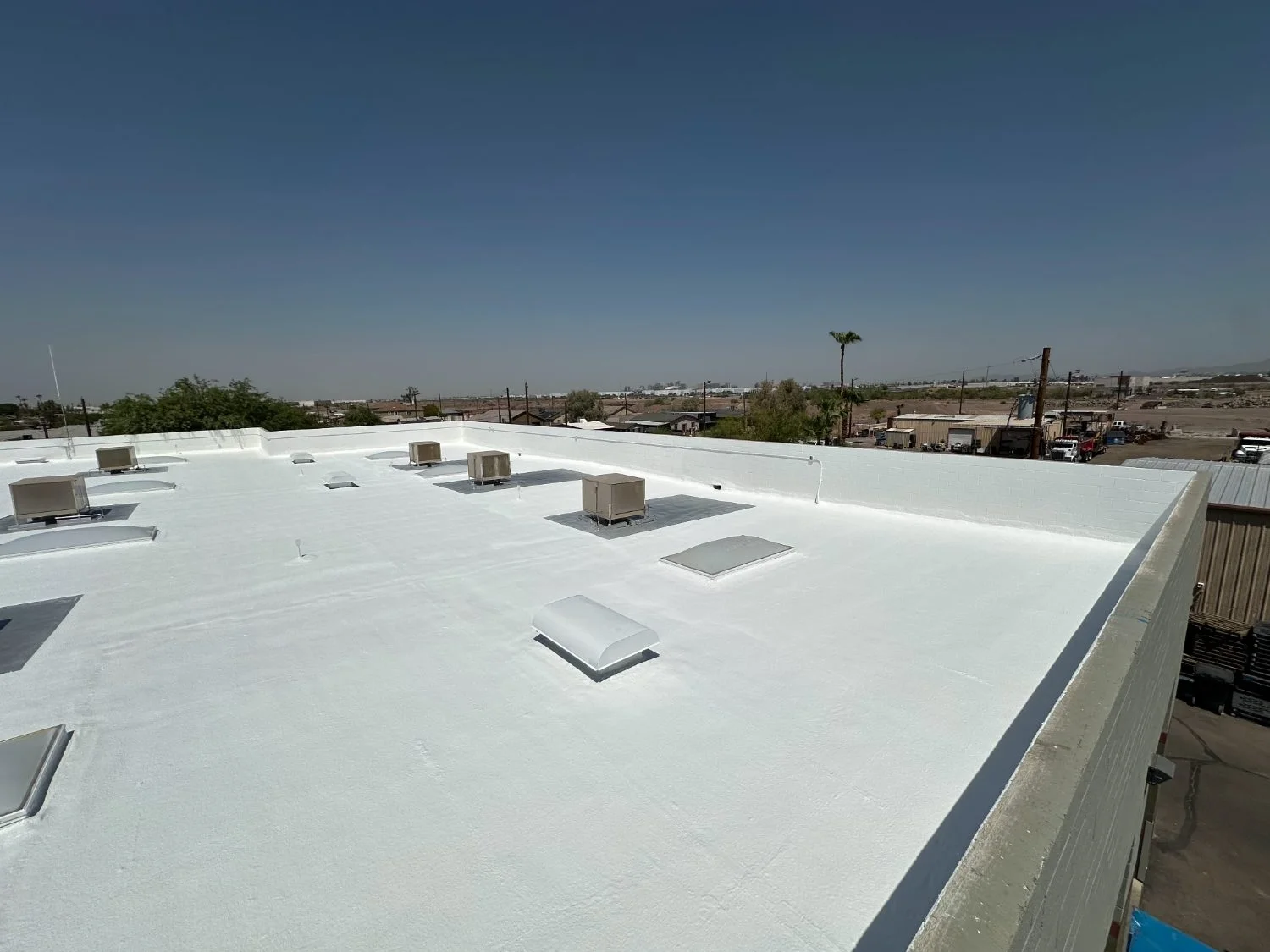
Sprayed polyurethane foam is the right answer on most flat and low-slope roofs in this valley — it self-flashes around everything already up there, adds insulation value, and gets recoated instead of replaced.
- Family owned and operated
- 17+ years in the East Valley
- The owner works every job
- Financing available
What this is
No seams means nothing to open up
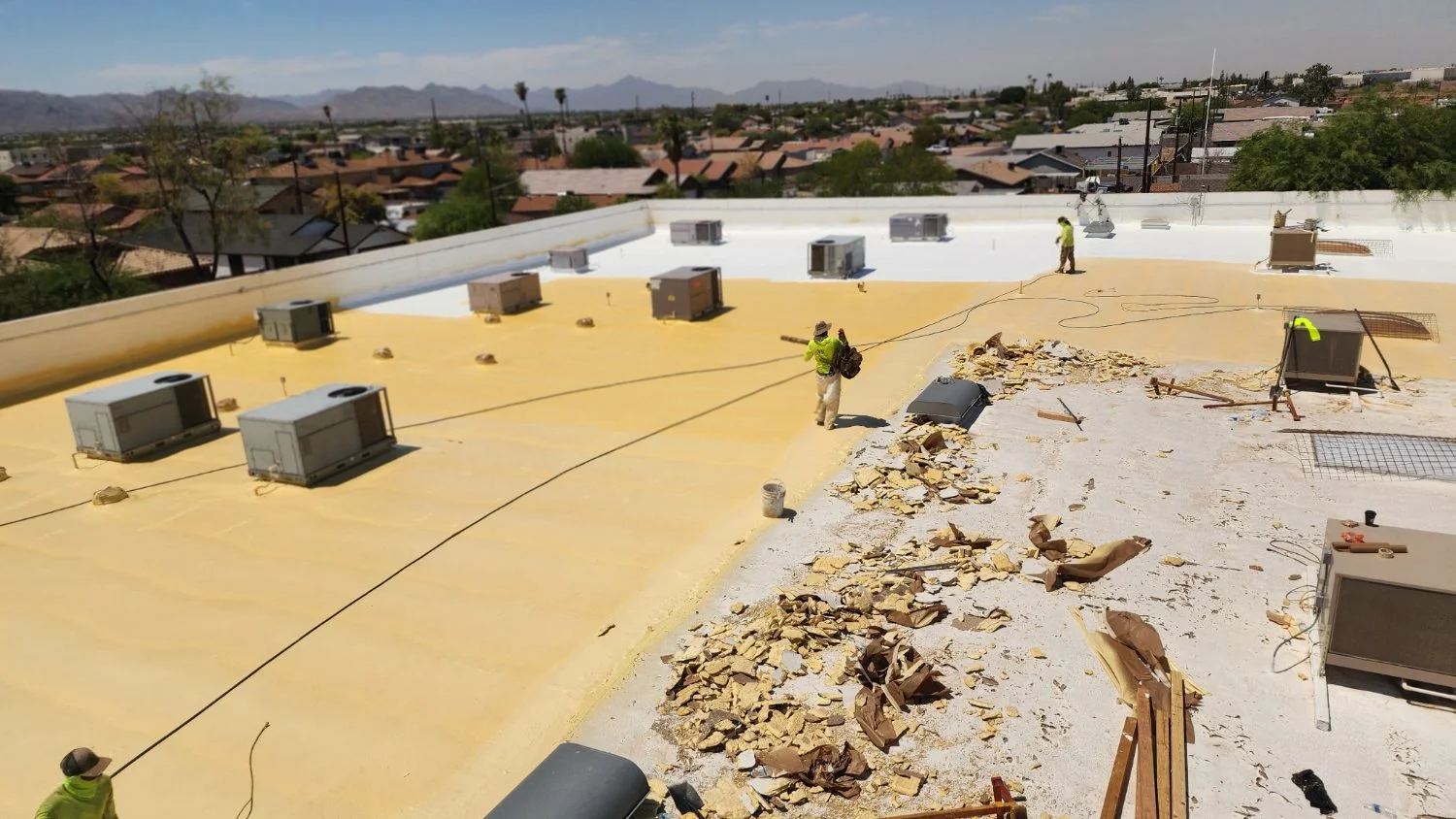
Foam is the right answer on most flat and low-slope roofs in the valley: it is seamless, it self-flashes around penetrations, it adds insulation value, and it can be recoated instead of replaced. We build it up to spec thickness and finish it with an elastomeric coating, then set a recoat schedule so you never have to tear it off again.
Traditional flat roofs fail at their laps and terminations. Foam is sprayed as one continuous surface, so it bonds over the whole substrate and self-flashes around curbs, drains and equipment. Slope can be built into the foam itself to move water off ponding areas that were never going to drain on their own.
- Sprayed polyurethane foam over prepared substrate
- Seamless — no seams or laps to fail
- Elastomeric top coat, recoatable rather than replaceable
- Ponding areas and drainage corrected in the foam build
Do you need this
When foam is the right system
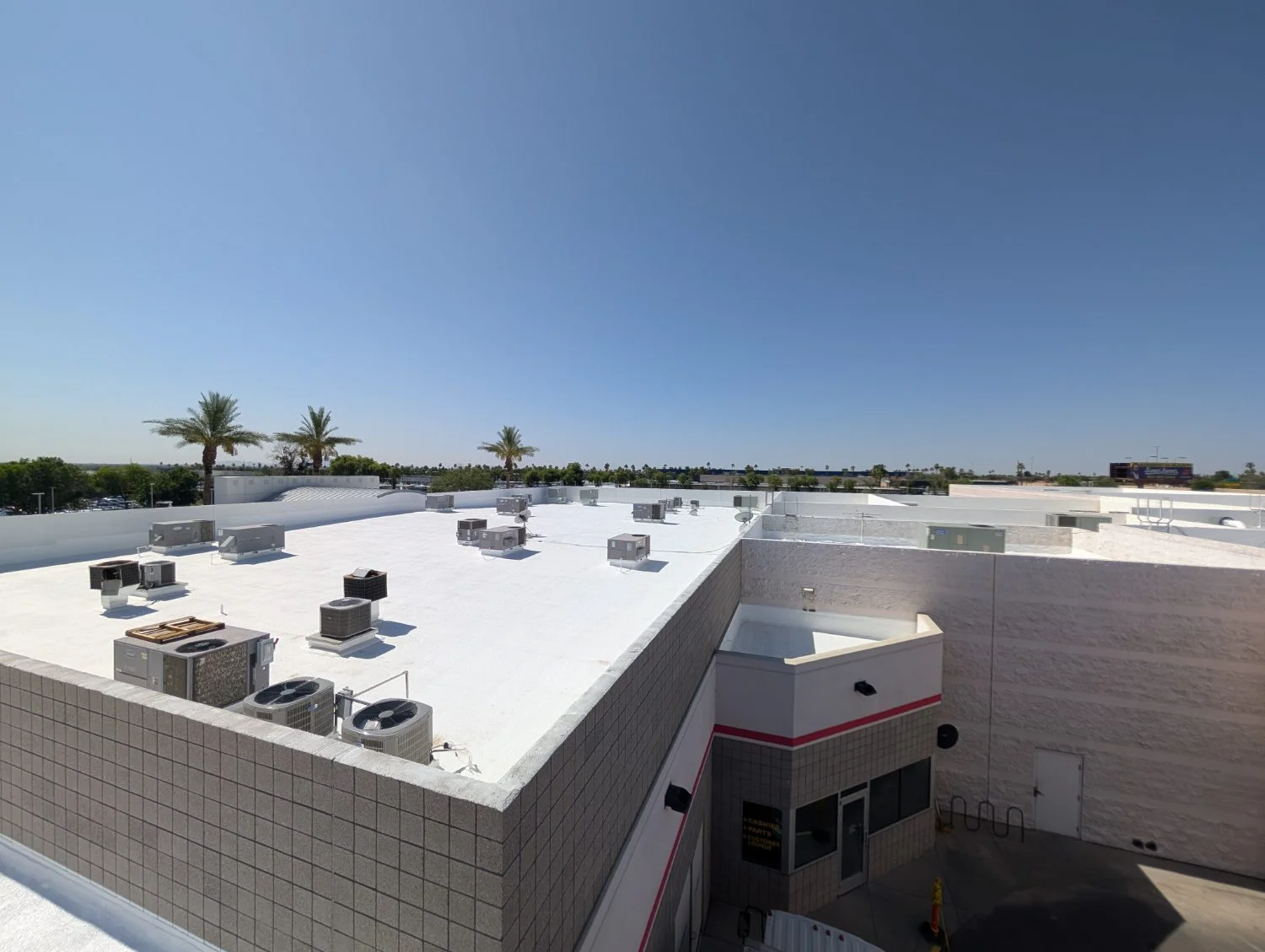
Foam suits both a home with a flat section and a 40,000 sq ft commercial deck. The scope changes; the system does not.
Ponding water
Standing water days after a storm means the deck never had the slope it needed. Foam can be built up to move it.
Roof-top equipment everywhere
Curbs, drains, conduit and HVAC are where flat roofs leak. A sprayed system flashes around all of it without a single lap.
Hot building below
Foam adds real insulation value at the roof line, which is felt immediately in the space under a low-slope deck.
An existing foam roof
A sound foam roof is recoated, not replaced. If yours has not been coated in a decade, that is a maintenance job, not a tear-off.
Scope of work
What a foam system includes
Recoat schedule set at closeout so the roof stays inside its warranty.
Substrate assessment
We check what is under the current surface for trapped moisture before quoting — wet insulation has to come out, not get sprayed over.
Surface preparation
The existing roof is cleaned, prepared and, where needed, removed so the foam bonds to a sound substrate.
Sprayed polyurethane foam
Applied to specified thickness in a continuous pass, with slope built in to correct drainage at ponding areas.
Elastomeric top coat
A UV-stable coating over the foam, applied at the manufacturer mil thickness that the warranty is written against.
Penetrations and terminations
Curbs, drains, scuppers and wall terminations detailed in the system rather than caulked after the fact.
Recoat schedule
You leave with the coating history, the interval, and photo documentation — so the next coat happens on time instead of after a leak.
Why it lasts
Large-scale commercial foam
Large commercial foam roofing is core work for us, scheduled around your tenants and your operating hours, with the owner scoping and overseeing the job directly. Your property manager gets a written scope by system and material, and ownership gets photo documentation and warranty paperwork they can file.
How it works
How the project runs
The same four steps on every job, with the owner on site for all of them.
- 1
Free inspection
The owner walks your roof, photographs what he finds, and shows you the condition of the layer under the tile — not just the surface.
- 2
Written scope and materials
You get a detailed report with photos, the system we recommend, the materials by name, and the price. Financing options if you want them.
- 3
Build
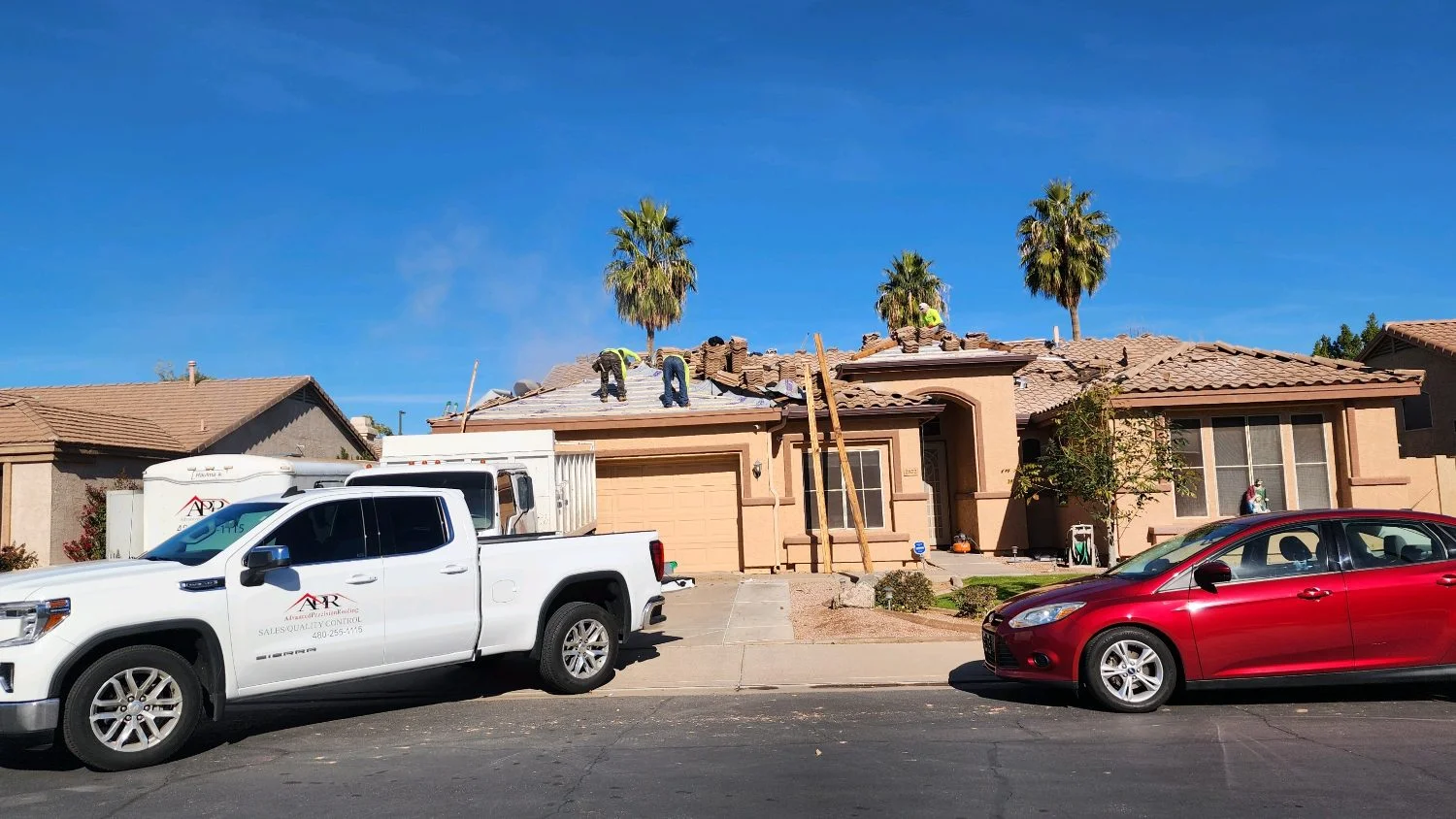
Tear-off, deck and flashing corrections, then the new system installed to manufacturer spec. Site cleaned at the end of every day.
- 4
Final walkthrough
We walk the finished roof with you, hand over photo documentation and the manufacturer warranty paperwork, and magnet-sweep the property.
Related services
Other work on the same roof
Most projects touch more than one of these. We scope them together so you are not paying twice for access.
Shingle roofing
Full shingle roof replacements built for Arizona sun exposure rather than minimum code.
Learn more →Tile roof waterproofing
A tile roof keeps water out at the underlayment, not the tile. We rebuild that layer with an advanced waterproofing system.
Learn more →New tile roofing
Complete new tile roof systems — concrete or clay tile over a waterproofing system chosen for the roof, not for the invoice.
Learn more →Questions
About foam roofing
How long does a foam roof last?
The foam itself is not the wear item — the coating is. Recoated on schedule, a foam roof keeps going for decades without ever being torn off.
Can you recoat instead of replacing?
If the foam is sound and dry, yes, and that is a much smaller project. We check for trapped moisture first, because coating over a wet roof buys nothing.
Does foam work on a house?
Yes — on the flat and low-slope sections many East Valley homes have. It is common to run tile on the pitched areas and foam on the flat.
Service area
Serving the East Valley
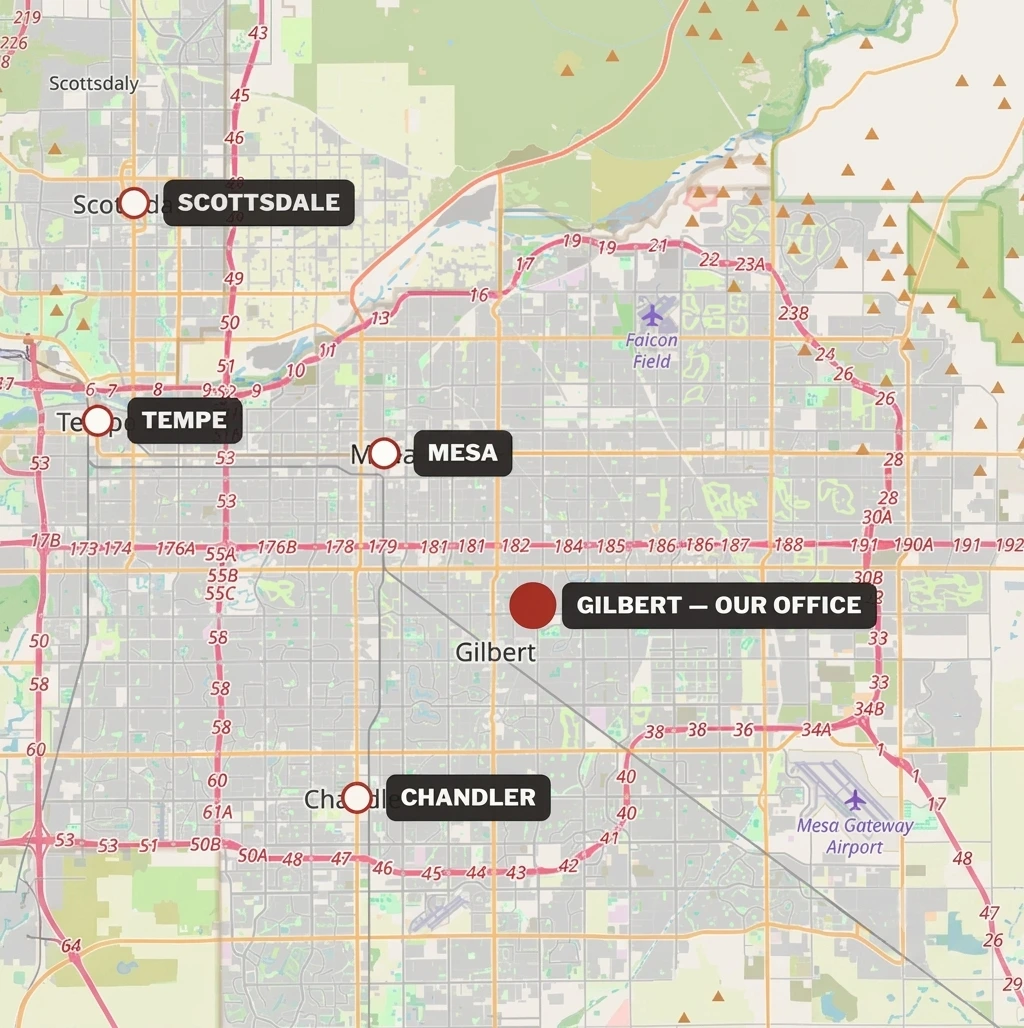
We work in Gilbert, Mesa, Chandler, Tempe, Scottsdale and the surrounding East Valley. Not sure whether you are in range? Call and ask.
- Gilbert
- Mesa
- Chandler
- Tempe
- Scottsdale
- Based in
- 321 E Pinon Way
Gilbert, AZ 85234 - Hours
- Monday – Saturday: 7:00am – 6:00pm Sunday: 8:00am – 6:00pm
- Call the office
- 480-255-1115
Next step
Find out what is under your tile
Book the free inspection and you get photographs of your own roof, a written scope, and a straight answer about what it needs — before you decide anything.